JDIT-K 13.3-Inch 4K2K Rugged Plus Display Sets a New Benchmark for Harsh Environments
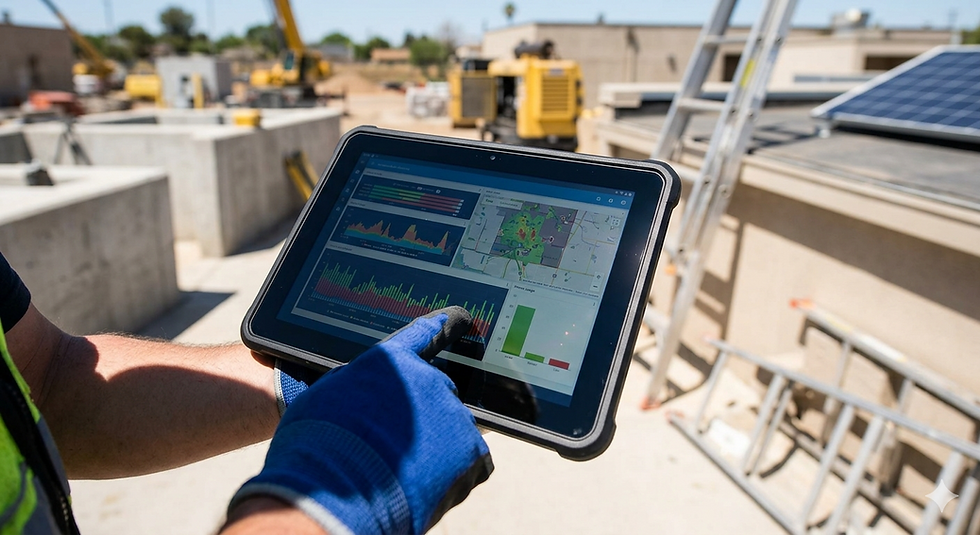
Modern mission-critical equipment increasingly requires a display that can deliver detailed imagery without sacrificing reliability in demanding operating conditions. High resolution alone is not enough. The display must also remain readable under strong ambient light, operate across extreme temperatures, and withstand the mechanical and electrical stresses associated with field deployment.
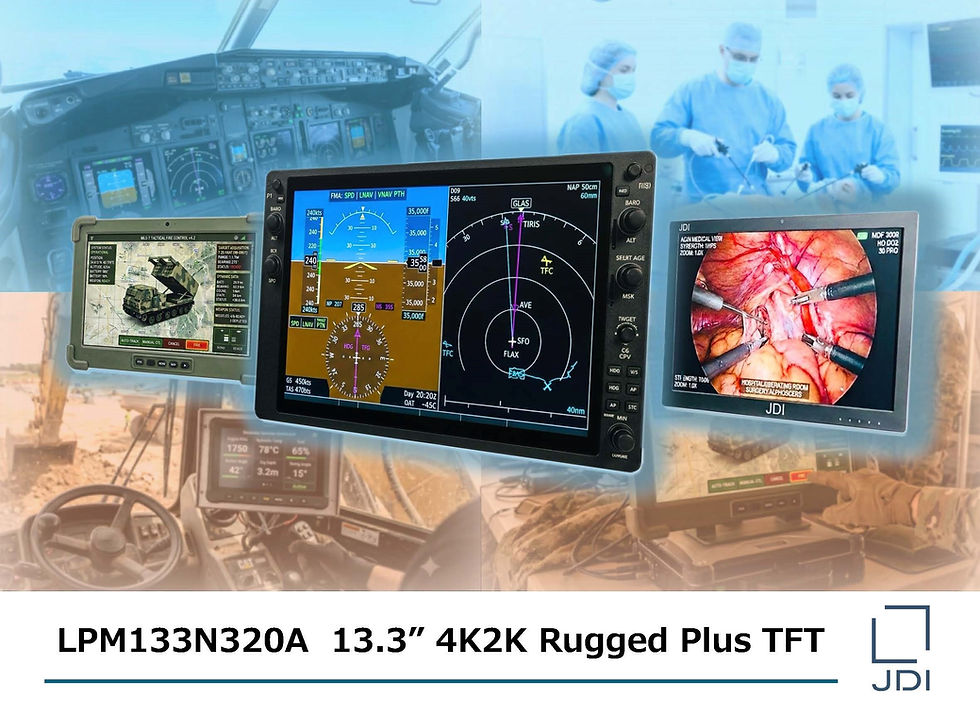
The new JDIT-K 13.3-inch 4K2K Rugged Plus TFT display brings these requirements together in a compact display module designed for military and defense equipment, aerospace instrumentation, advanced industrial systems, scientific equipment, and medical applications.
Available as the LPM133N320A standard display module and the LPM133N321A module with an integrated projected capacitive touchscreen, the platform combines 3840 × 2160 resolution, 1200-nit brightness, a wide operating temperature range, IPS viewing performance, and a 70,000-hour LED lifetime.
4K2K Resolution in a Compact 13.3-Inch Format
The LPM133N320A features a native resolution of 3840 × 2160 pixels, delivering full 4K2K visual detail within a 13.3-inch diagonal format.
With a pixel density of 331 pixels per inch, the display can reproduce fine text, detailed graphics, measurement data, maps, imaging content, and complex user interfaces with exceptional clarity. This is particularly valuable in applications where operators must interpret a large amount of information within a limited display area.
Potential use cases include:
Fully rugged laptops
Portable command and control systems
Aerospace instrumentation
Mobile diagnostic equipment
Scientific imaging systems
Industrial inspection equipment
High-resolution embedded interfaces
For OEM developers, the compact form factor makes it possible to achieve high information density without moving to a larger and heavier display assembly.
LTPS Technology for High Pixel Density and Efficient Performance
The display uses LTPS, or low-temperature poly silicon, TFT technology. LTPS supports higher pixel density and improved electrical performance, making it well suited for a compact 4K2K panel.
This architecture enables the module to deliver fine image detail while maintaining power-efficient operation—an important consideration for mobile, embedded, and field-deployed systems where heat generation and available power may be limited.
Power consumption should ultimately be evaluated within the completed product because system performance will also depend on the graphics processor, backlight setting, touchscreen, interface electronics, thermal design, and usage profile.
10-Bit Color for Detailed Image Representation
The JDIT-K Rugged Plus display supports 10-bit RGB data, providing a color palette of more than 1.073 billion colors.
Compared with displays using lower color depth, 10-bit support can provide smoother tonal transitions and reduce visible banding in gradients, shadows, technical visualizations, and image-based workflows.
The module also specifies an 80% NTSC typical color gamut and a 1300:1 contrast ratio, giving OEM developers a strong visual platform for applications that require detailed and accurate image presentation.
These characteristics may benefit:
Scientific visualization
Medical equipment interfaces
Imaging and inspection systems
Mapping and situational-awareness applications
Aerospace data visualization
Advanced industrial control systems
Final color and image-performance requirements should be validated at the system level, particularly when the display will be used for specialized medical, scientific, or mission-critical interpretation.
Up to 1200 Nits for Challenging Lighting Conditions
The display provides brightness levels of up to 1200 nits, supporting visibility in bright indoor environments and demanding field applications.
High brightness can be especially important when equipment is used near windows, under strong industrial lighting, inside a vehicle, or outdoors. However, brightness is only one part of display readability.
The completed optical stack—including the LCD, touchscreen, cover glass, bonding method, and surface treatments—will influence final contrast and reflectance.
Depending on the application, OEM manufacturers may also consider:
Optical bonding
Anti-reflective coatings
Anti-glare surface treatments
Custom cover glass
Automatic brightness control
Protective overlays
Combining these technologies with the panel’s 1200-nit capability can help optimize readability for the intended environment.
Rugged Plus Engineering for Extreme Environments
The 13.3-inch display has been developed as part of JDIT-K’s Rugged Plus platform, combining high-resolution imaging with structural and electrical design intended for demanding operational conditions.
The module supports a wide operating temperature range of -40°C to +85°C, making it a strong candidate for systems deployed outside conventional office and commercial environments.
Its ruggedized design provides increased resistance to:
Mechanical shock
Continuous vibration
Electrostatic discharge
Temperature extremes
Field-deployment stresses
These characteristics are relevant to products used in military and defense, aerospace, industrial, scientific, and mobile diagnostic environments.
The exact qualification requirements will depend on the finished product. OEM teams should evaluate the display as part of the complete enclosure and system rather than assuming that component-level capabilities automatically qualify the final equipment.
IPS Technology for Wide Viewing Angles
Both configurations use IPS, or in-plane switching, technology to provide wide viewing angles and consistent image performance when the screen is viewed off-axis.
Wide viewing capability is important when:
Multiple users need to see the display simultaneously
The equipment is mounted at an angle
The operator’s position changes during use
A mobile system cannot always be placed directly in front of the user
Image and color consistency must be maintained across viewing positions
This makes the modules suitable for embedded systems, open-frame equipment, shared workstations, mobile diagnostic platforms, and portable field systems.
Standard and Touchscreen Configurations
JDIT-K offers the display in two configurations:
Model | Configuration | Best Suited For |
LPM133N320A | Standard 13.3-inch 4K2K Rugged Plus TFT module | Systems using external controls, a separate touch solution, or custom optical integration |
LPM133N321A | 13.3-inch 4K2K Rugged Plus module with fully integrated projected capacitive touchscreen | Interactive embedded systems requiring a streamlined display-and-touch assembly |
The integrated projected capacitive touchscreen option can simplify the development of modern user interfaces while reducing the need for OEM teams to source and align a separate touch sensor.
Depending on the final operating environment, touch performance should be evaluated for cover-glass thickness, glove use, water exposure, electromagnetic conditions, and required multi-touch functionality.
eDP 1.4 Interface for Modern System Architectures
Both modules use a four-channel 5.4 Gbps eDP 1.4 interface. The high-bandwidth embedded DisplayPort connection supports the data requirements of a 3840 × 2160 display while enabling integration with modern embedded computing platforms.
Before selecting the module, engineering teams should confirm:
Graphics-controller compatibility
Required eDP lane configuration
Signal timing
Cable design and length
Connector location and orientation
Power sequencing
Backlight control
Touch-controller interface for the LPM133N321A
Electromagnetic compatibility requirements
Reviewing these requirements early can reduce display bring-up time and avoid electrical or mechanical redesign later in development.
Zero Bright Dot Defect Support
The display is specified to support Zero Bright Dot Defect standards, addressing a visible quality concern in applications where even a single bright pixel could distract from critical content.
This feature can be particularly valuable for high-resolution professional equipment, where operators regularly examine detailed images against dark backgrounds.
Quality criteria, inspection conditions, and acceptance requirements should be confirmed for the specific project and purchasing specification.
70,000-Hour LED Backlight Lifetime
The module specifies an LED backlight lifetime of 70,000 hours, supporting products designed for long operating periods and extended field service.
Backlight lifetime is an important selection factor for industrial, defense, aerospace, scientific, and medical equipment because replacing a display in deployed systems can be costly and operationally disruptive.
As with any lifetime specification, OEM manufacturers should confirm the applicable test conditions, brightness definition, temperature, duty cycle, and end-of-life criteria when evaluating performance for a specific program.
Key Specifications
Specification | JDIT-K 13.3-Inch 4K2K Rugged Plus Display |
Standard model | LPM133N320A |
Touchscreen model | LPM133N321A |
Display size | 13.3 inches |
Resolution | 3840 × 2160 pixels |
Pixel density | 331 PPI |
TFT technology | LTPS |
Viewing technology | IPS |
Color depth | 10-bit RGB; more than 1.073 billion colors |
Color gamut | 80% NTSC, typical |
Contrast ratio | 1300:1 |
Brightness | Up to 1200 nits |
Operating temperature | -40°C to +85°C |
Interface | Four-channel 5.4 Gbps eDP 1.4 |
Touch option | Fully integrated projected capacitive touchscreen |
LED lifetime | 70,000 hours |
Pixel quality | Zero Bright Dot Defect support |
Target Applications
The display’s combination of high resolution, brightness, temperature performance, durability, and compact size makes it suitable for a variety of demanding OEM applications.
Military and Defense Equipment
Fully rugged laptops, portable command systems, field-deployed terminals, and mission interfaces can benefit from the panel’s compact 4K2K resolution and wide-temperature operation.
Aerospace Instrumentation
Aerospace monitoring, test, and instrumentation systems may require high information density, wide viewing angles, and dependable operation under vibration and temperature changes.
Industrial Systems
Advanced automation, inspection, control, and machine-vision equipment can use the high-resolution panel to present detailed production data and visual information.
Scientific Equipment
The combination of 331 PPI, 10-bit RGB data, and more than one billion colors supports scientific visualization and image-intensive analytical equipment.
Medical Equipment
Mobile diagnostic systems and specialized medical equipment may benefit from the compact resolution, brightness, and touchscreen option. Medical manufacturers should separately validate the complete display system against the intended use and all applicable performance and regulatory requirements.
Display Integration Considerations for OEM Manufacturers
Choosing the panel is only the beginning of display integration. Before specifying either module, OEM development teams should evaluate:
Mechanical dimensions and mounting
Enclosure clearances
eDP interface compatibility
Thermal management
Power consumption and backlight control
Touchscreen requirements
Custom cover glass
Optical bonding
Anti-glare or anti-reflective treatments
Cable and connector requirements
Shock and vibration performance
Electromagnetic compatibility
Qualification and environmental testing
Long-term product availability
Evaluating these requirements early allows the display, enclosure, electronics, and user interface to be developed as a coordinated system.
JDIT-K Rugged Plus Displays Available Through IDS
Interactive Display Solutions (IDS) supports OEM manufacturers and system integrators with display selection, customization, and integration for specialized products.
The new JDIT-K LPM133N320A and LPM133N321A provide a compelling platform for applications that require compact 4K2K resolution and dependable operation in harsh environments.
Depending on project requirements, IDS can help evaluate:
Standard or integrated-touch configuration
Electrical and mechanical compatibility
Custom cover glass
Optical bonding
Surface treatments
Cable and interface requirements
Embedded and open-frame integration
Sample and production requirements
Looking for a 13.3-Inch 4K Rugged Display?
The JDIT-K 13.3-inch Rugged Plus platform combines 3840 × 2160 resolution, 331 PPI, up to 1200-nit brightness, 10-bit color, IPS viewing technology, -40°C to +85°C operation, and a 70,000-hour LED lifetime in a compact module.
Contact Interactive Display Solutions to discuss the LPM133N320A, the touchscreen-enabled LPM133N321A, sample availability, and integration requirements for your next rugged display project.
Published by IDS Display - Interactive Display Solutions, Inc.